2026 Best Signage Printing Options for Your Business Growth
In today’s competitive market, effective signage printing can significantly impact a business's visibility. The right signage captures attention and communicates key messages clearly. However, selecting the best options can be overwhelming. Many businesses grapple with choosing materials, designs, and printing techniques for their signage. This process requires thoughtful consideration of brand identity and target audience.
Successful signage printing not only enhances aesthetics but also drives customer engagement. Quality prints can elevate a brand while conveying professionalism. Yet, businesses need to reflect on their specific needs. Are the designs versatile? Will they stand the test of time? These questions are essential in avoiding poor decisions that could hinder growth.
Keeping up with trends is vital. Innovative printing technologies are continuously emerging. Businesses should embrace these advancements to stay relevant. By exploring various signage printing options, companies can find the perfect fit for their needs. Ultimately, effective signage can serve as a powerful tool in achieving business growth and establishing a lasting presence in the market.
Understanding Signage Printing: Importance for Business Growth
Signage printing plays a pivotal role in driving business growth. A recent study found that 76% of consumers enter a store based on its signage. Eye-catching signage attracts attention and creates a strong first impression. High-quality materials and vibrant colors can enhance visibility. Effective signage not only informs but also builds brand identity.
Tips: Choose durable materials for outdoor signs. This ensures longevity through weather changes. Clear, bold fonts increase readability from a distance. Remember that simplicity can often convey your message more powerfully.
Moreover, businesses that prioritize signage see a 10-15% increase in sales, according to industry reports. However, not every sign will resonate with customers. Testing different designs and placements is essential. Evaluate the effectiveness of your signs through metrics such as foot traffic and sales data. Adjustments based on real feedback can lead to significant improvements.
Tips: Utilize A/B testing for different sign variations. Track interactions to gather valuable insights. Regularly refresh your signs to avoid customer fatigue and maintain interest.
Types of Signage: Selecting the Right Option for Your Needs
When considering signage for your business, it’s essential to select the right option suited to your needs. The types of signage vary from banners and wall graphics to digital displays and vehicle wraps. According to recent industry reports, well-designed signage can boost brand awareness by up to 75%. This underscores the importance of choosing the right type that captures your target audience's attention.
For indoor needs, vinyl banners provide flexibility and affordability. Outdoor signage, such as storefronts or billboards, needs weather durability. Digital signage offers dynamic content, allowing you to update information swiftly. Research indicates that 60% of consumers visited a store after seeing outdoor signage. This data signifies the potential impact of signage on driving foot traffic.
Tip: When choosing signage, consider your location and visibility. Analyze your competitors and their signage effectiveness. A thoughtful approach can optimize your investment in signage. Reflect on past decisions—what worked and what didn’t. Adjust your strategy based on this insight for better outcomes in the future.
Key Factors to Consider in Signage Printing Choices
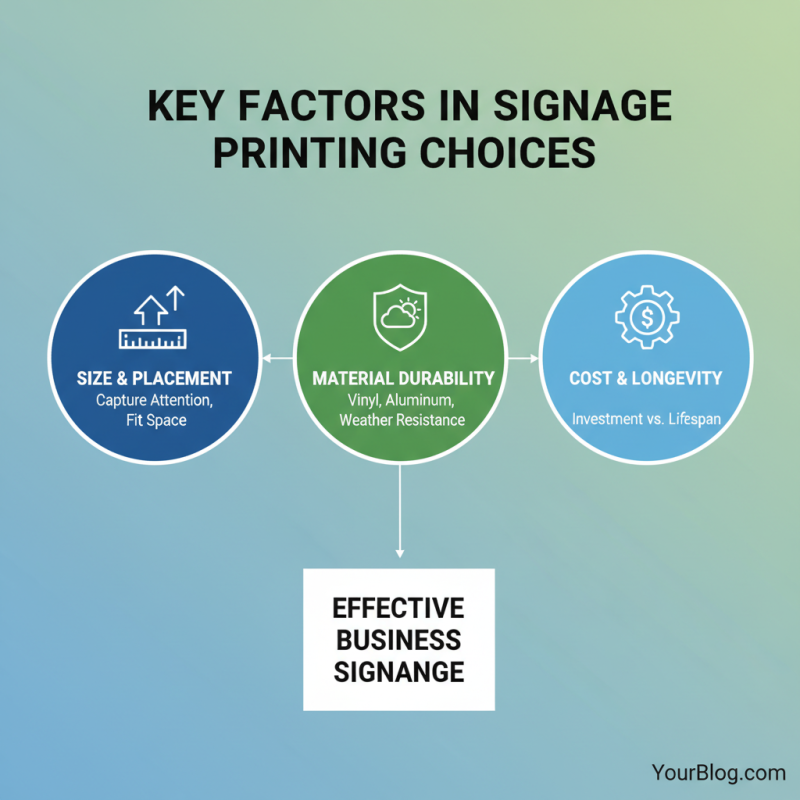
When considering signage printing for your business, several crucial factors can influence your decision. Size and placement play a vital role. A larger sign can capture attention. However, it must fit your physical space well. Choosing an appropriate material is equally important. Durable materials like vinyl or aluminum can withstand various weather conditions.
Tips: Assess the environment where your signage will be displayed. If it's outdoors, opt for materials that resist fading and damage. This adds longevity and consistency to your brand image.
Color choice can impact visibility. Bright, contrasting colors are easier to spot. However, using too many colors can lead to confusion. Simplicity often translates to clarity. Test your color options with a focus group before making a final decision.
Tips: Use a professional design tool to visualize your signage. Make adjustments based on what appeals to your target audience. There’s no harm in going back to the drawing board if initial ideas fall flat.
Innovative Technologies in Signage Printing for Better Outcomes
The world of signage printing is rapidly evolving with innovative technologies driving better results. Companies increasingly rely on digital printing methods, which allow for high-quality visuals and quick turnaround times. A recent industry report indicates that digital signage can enhance customer engagement by up to 30%. This is crucial for businesses aiming to attract and retain their clientele.
In addition to digital printing, advancements in eco-friendly materials are becoming significant. Using sustainable inks and recyclable substrates can improve a company's image. A notable study highlighted that 70% of consumers prefer brands that prioritize sustainability. However, the challenge remains in balancing cost with these eco-conscious approaches.
Furthermore, utilizing augmented reality in signage creates an interactive experience. This technology can increase information retention among customers. Some businesses, however, face difficulties integrating these solutions. Aligning AR features with branding requires thoughtful planning and investment. Continuous assessment of these technologies is essential to ensure they meet business goals effectively.
2026 Best Signage Printing Options for Your Business Growth
This chart showcases the market share percentage of various signage printing options projected for 2026. As businesses seek innovative technologies in signage printing, digital printing leads the way, followed by screen printing and UV printing. Understanding these options can help guide effective business growth strategies.
Cost-effective Strategies for Maximizing Your Signage Investment
When investing in signage, cost-effectiveness is crucial. Businesses often overlook the importance of quality materials. Choosing durable materials may seem more expensive initially, but they save money in the long run. Signs that resist wear and tear require less frequent replacement. In turn, this maximizes your investment.
Design matters as well. A cluttered or vague message can confuse prospective customers. Clear, bold designs attract attention. Hiring a graphic designer may incur extra costs, yet it can significantly improve your signage's effectiveness. Investing in design can yield higher returns.
Consider location and visibility when installing signs. A well-placed sign can draw in foot traffic. However, signs that are hard to see or read won't deliver results. Take time to analyze foot traffic patterns. This reflection can help identify ideal placements for maximum impact. Your signage deserves careful thought and strategic planning.
2026 Best Signage Printing Options for Your Business Growth - Cost-effective Strategies for Maximizing Your Signage Investment
| Signage Type |
Durability |
Cost-Effectiveness |
Visibility |
Best Use Cases |
| Vinyl Banners |
1-3 years |
High |
Excellent |
Events, Promotions |
| A-Frame Signs |
1-2 years |
Moderate |
Good |
Sidewalk Advertising |
| Digital Signage |
3-10 years |
Higher Initial Cost |
Outstanding |
Retail, Restaurants |
| Foam Core Signs |
Short-term |
Very High |
Moderate |
Indoor Displays, Presentations |
| Wall Graphics |
2-5 years |
Moderate |
Good |
Office Branding, Murals |